
On this page
If you have been researching a Juvelook skin booster in Korea, you have probably seen it described as an injectable that helps skin look firmer, smoother and more resilient over time. Juvelook belongs to a family of collagen stimulator injections built around PLLA (poly-L-lactic acid), and it has become a popular option in Seoul's skin clinics. This guide explains, in plain language, what Juvelook is, how PLLA works, how it compares with other boosters such as Rejuran and Sculptra, what results and downtime are realistic, and how pricing and consultations work at HERA Clinic in Gangnam. Because every person's skin is different, anything described here should be confirmed with a qualified doctor before you decide.
What is Juvelook, and why is it popular in Korea?
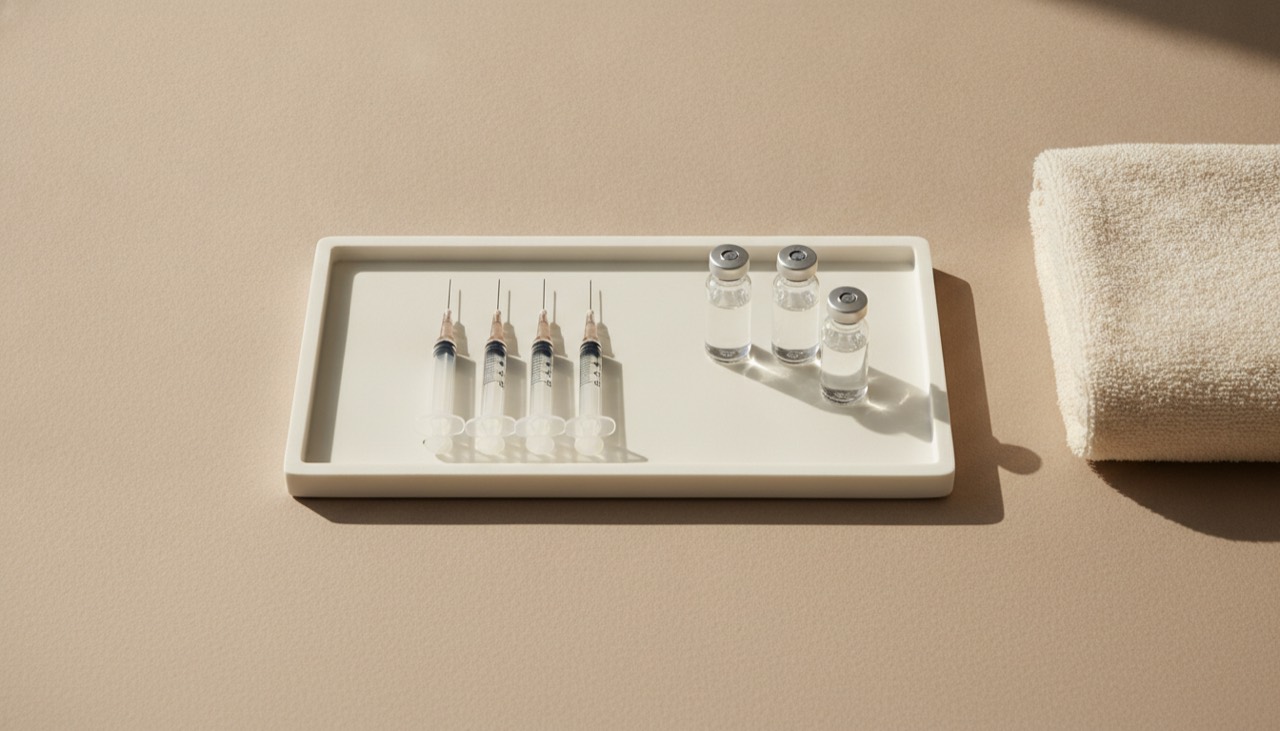
Juvelook is an injectable PLLA skin booster that combines micronised poly-L-lactic acid with a hydrating carrier. Rather than adding volume the way a traditional filler does, a PLLA injection works gradually by encouraging your own skin to build new collagen. In Korea, where dewy "glass skin" and natural firmness are highly valued, interest in Juvelook Korea has grown quickly, and many international visitors now include it in a Seoul skincare itinerary. Interest has spread across Asia as well, and searches such as Juvelook Singapore often bring travellers to Gangnam clinics to be treated by experienced injectors.
It is worth being clear about categories from the start. Juvelook is a biostimulator, not a hyaluronic-acid filler and not a laser. It aims to improve the quality and structure of the skin itself, which is why results tend to build slowly rather than appear the same day.
How PLLA works: collagen stimulation, not filler
PLLA is a biocompatible, biodegradable material that has been used in medicine for many years. When placed into the appropriate layer of the skin, the microparticles act as a scaffold and prompt a controlled, low-grade repair response. Over the following weeks, fibroblasts may gradually deposit new collagen around this scaffold, which can support firmness and a smoother surface. Because the effect depends on your body producing collagen, a collagen stimulator injection is often called a "biostimulator" rather than a filler, and the changes tend to be progressive.
Since it supports the skin's own structure, Juvelook is frequently discussed alongside hydration and barrier care. If your main concern is dryness, dullness or a tired-looking surface, you may also want to read about our hydration and repair boosters, which target moisture and skin quality from a complementary angle.
Clinically, it helps to understand a few details that shape how a PLLA booster behaves. Juvelook is a hybrid formulation in which micronised PLLA is combined with a hyaluronic-acid carrier, so a session can offer some immediate hydration while the collagen-stimulating effect develops underneath. The powder is reconstituted with sterile water and left to hydrate fully before use, and it is typically placed into the superficial dermis in many small microdroplets rather than a few deep boluses. This shallow, evenly distributed technique is part of why the product is often described as skin-quality oriented, and it is also why even, unhurried injection matters for a natural result.
Because the response is biological, the timeline is not something a clinic can shortcut. Fibroblasts remodel and lay down new collagen over weeks, which is why most plans schedule sessions roughly three to four weeks apart and assess the outcome at the two-to-three-month mark. Massage after treatment, staying hydrated and avoiding the temptation to judge results in the first few days are all part of getting a fair read on how your own skin has responded.
Juvelook vs Rejuran: two different boosters, not a ranking
One of the most common questions is Juvelook vs Rejuran. Both are injectable "skin boosters", but they work through different mechanisms, and neither is simply better than the other. The right choice depends on what you want to improve.
Rejuran is based on polynucleotides (PN/PDRN) derived from purified salmon DNA, and is generally associated with skin regeneration, hydration and soothing. Juvelook is a PLLA collagen stimulator, and is generally associated with firmness and structural support. Some patients use them for different concerns, and a doctor can advise whether one, the other, or a combined plan makes sense for you.
| Feature | Juvelook | Rejuran |
|---|---|---|
| Main ingredient | PLLA (poly-L-lactic acid) | Polynucleotides (PN / PDRN) |
| Category | Collagen stimulator (biostimulator) | Regenerative skin booster |
| Primary aim | Firmness, structure, skin quality | Regeneration, hydration, soothing |
| How results appear | Gradual, over weeks to months | Gradual, with a hydration focus |
| Best thought of as | Building collagen scaffolding | Supporting skin repair |
In short, they address related but distinct concerns. Choosing between them, or combining them, is a clinical decision rather than a matter of which name is more familiar.
What Juvelook may help with: realistic results
People consider Juvelook for gradual improvements in firmness, fine crepey texture and overall "bounce". Because collagen builds slowly, Juvelook results are usually assessed over two to three months, not days. When you look at Juvelook before and after photos, remember that images vary with lighting, angle, session count, the area treated and individual response, so they are a rough guide rather than a promise. Results can differ meaningfully from person to person, and some people respond more than others.
For those whose main concerns are enlarged pores or uneven texture left by past breakouts, a booster may be one part of a broader plan. You can compare options for pores and acne-scar focused care to see how different approaches are combined for texture goals.
The treatment: sessions, downtime and honesty about side effects
A typical Juvelook plan involves a small number of sessions spaced a few weeks apart, tailored to your skin and goals. A session usually begins with cleansing and often a numbing cream, followed by fine injections across the target area. The appointment itself is generally short.
Downtime is usually mild but real, and it is fair to be honest about it. You may notice redness, small raised bumps, swelling or bruising for a few days after treatment. As with any biostimulator, there is a small risk of firm lumps or nodules forming under the skin, which is one reason that injector experience, product handling and correct technique matter. Tell your doctor about your medical history, allergies, medications and any tendency to keloid or nodule formation. Serious complications are uncommon, but any injectable carries some risk, so aftercare instructions should be followed carefully.
Juvelook vs Sculptra and other biostimulators
Sculptra is another well-known PLLA product, so people often ask about Juvelook vs Sculptra or look for a Sculptra alternative. Both are PLLA-based biostimulator injectables, but their formulation, particle characteristics and typical injection depth can differ, which affects how each is used in practice. Juvelook is sometimes described as a more skin-quality oriented booster, while some other PLLA products are used more for deeper structural support, even though the loose term "biostimulator filler" can blur these lines. The most useful comparison is a personalised one, based on your face and goals rather than the brand name alone.
Pricing and consultations at HERA Clinic in Gangnam
Juvelook pricing depends on how many vials and sessions your plan needs, so a firm quote follows an in-person assessment rather than a fixed online figure. As a general guide, boosters are usually priced per session or as a package, and your consultation will set out the expected range before you commit to anything. At HERA, local and international patients pay the same price, with no foreigner surcharge. You can review our full range of skin-regeneration boosters to understand where Juvelook fits among the options.
During a consultation, a doctor will examine your skin, discuss your goals, and confirm whether Juvelook, another booster, or a combination is most appropriate, including realistic timelines and any reasons it may not be suitable for you.
Visiting HERA in Gangnam: what to expect as an international patient

Consultation and booking. We recommend arranging a consultation before you travel so that a doctor can confirm whether Juvelook suits your skin and how many sessions may be realistic. A pre-visit message with your concerns and a few clear photos helps us give you a sensible plan and time estimate, though the final assessment is always made in person.
Language and interpretation. HERA regularly treats international patients, and English-language support is available so that consent, medical history and aftercare instructions are clearly understood. If anything about the treatment or its risks is unclear, ask during the consultation rather than on the day of the injection.
How long to stay. A single Juvelook session is short and does not require hospitalisation, so many visitors fit it into a normal trip. Because mild redness, small bumps or bruising can appear for a few days, it is sensible to leave a buffer before major photos or events, and to plan any follow-up session around your travel dates rather than the reverse.
Aftercare while you travel. After treatment you may be advised to avoid heavy heat (saunas, very hot showers), intense exercise, alcohol and strong sun for a short period, and to follow any massage guidance given by your doctor. Keep our contact details with you during your stay so that, if you have a question or notice anything unexpected, you can reach the clinic quickly rather than waiting until you are home.
One price for everyone. At HERA, local and international patients pay the same price for Juvelook, with no foreigner surcharge, and your quote is confirmed after the in-person assessment. Payment methods and package options are explained transparently during the consultation so there are no surprises.
Combining treatments. Some visitors ask about pairing Juvelook with other procedures during a single trip. Whether that is appropriate, and in what order, is a clinical decision your doctor will make based on your skin and recovery, not something to plan purely around a travel schedule.
Throughout, our aim is honest guidance rather than upselling. If Juvelook is not the right fit for your skin or goals, or if the timeline does not match your trip, we would rather tell you that than promise results we cannot stand behind.
Is Juvelook right for you?
Juvelook can be a reasonable option for people who want gradual, natural-looking firmness and are comfortable with results that build over time rather than appearing instantly. It may not suit everyone, and certain skin conditions, health factors or expectations can make other treatments a better fit. The only way to know is a proper assessment with a qualified doctor, who can weigh your skin type, medical history and goals together. This guide is educational and does not replace individual medical advice.
FAQ
Frequently asked questions
Q1Is Juvelook a filler?
No. Juvelook is a PLLA collagen stimulator, sometimes called a biostimulator. Instead of adding immediate volume like a hyaluronic-acid filler, it encourages your own skin to build collagen gradually, so results tend to appear over weeks to months.Q2How is Juvelook different from Rejuran?
They are different types of booster. Juvelook uses PLLA to stimulate collagen and support firmness, while Rejuran uses polynucleotides (PN/PDRN) and is associated more with regeneration, hydration and soothing. Neither is simply better; a doctor can advise which suits your goals, or whether to combine them.Q3How long do Juvelook results take, and how long do they last?
Because collagen forms slowly, results are usually judged over about two to three months rather than days. Longevity varies with your skin, the number of sessions and lifestyle factors, so your doctor can give a more personalised estimate at consultation.Q4What is the downtime and are there side effects?
Downtime is usually mild but real. Redness, small bumps, swelling or bruising can occur for a few days. As with any biostimulator, firm lumps or nodules are a small risk, which is why an experienced injector and correct technique matter. Discuss your medical history beforehand.Q5Do foreign patients pay more at HERA Clinic?
No. HERA charges local and international patients the same price for Juvelook, with no foreigner surcharge. Because pricing depends on the number of vials and sessions, a firm quote is given after an in-person consultation.
HERA Journal
Keep reading
 Skin & acne
Pico Laser Korea: A Complete Patient Guide
What pico laser in Korea actually treats, who it suits, what a session includes, recovery, and how a HERA visit works for international patients.
8 minRead → Guides
Thread Lift in Korea: A Complete Patient Guide
An honest guide to thread lift in Korea: how PDO thread lifting works, who it suits, realistic downtime, thread lift vs filler, and how pricing works at HERA Clinic in Gangnam.
7 minRead → Guides
Polynucleotide Skin Booster in Korea: The Rejuran Guide
Polynucleotide (salmon-DNA) skin boosters like Rejuran repair skin from within. How they work, the downtime to expect, and how they compare to PRP — for international patients in Seoul.
7 minRead →